
The blender method vs kneading kava in a strainer: surprising findings
TLDR: When Root & Pestle compared blending against hand-kneading under controlled lab conditions, blending lost on almost every measure. It pulled fewer kavalactones (about 86% of what a moderate hand squeeze achieves), shifted the chemotype in an undesirable direction (more flavokavains, less kavain), made the drink more bitter, and pushed more indigestible fibre through the strainer. If you can knead by hand, knead by hand.
Many kava drinkers reach for a blender when preparing traditional grind kava. On our kava preparation page we list the blender method as a quick alternative to kneading. We have never been huge fans. On a personal level we have always found it messy and noisy for the one or two minutes it saves. On a quality level we suspected blending might micronise the root particles enough to slip through the strainer and irritate the stomach. We have also acknowledged that some people may simply prefer a mechanical solution, either because hand-kneading is difficult for them or because they value the consistency a machine offers. We have also entertained the possibility that blending might produce a stronger drink and therefore be a touch more economic. Unsurprisingly, many new kava drinkers reach for the blender first.
Our friends at Root & Pestle have now tested those assumptions in their lab. The general conclusion supports our position that the blender method is inferior to traditional kneading, but some of the findings on potency genuinely surprised us. It is a great read and one that has firmed up our advice against blending. Their report follows.

New insights into the squeeze from Root & Pestle R&D
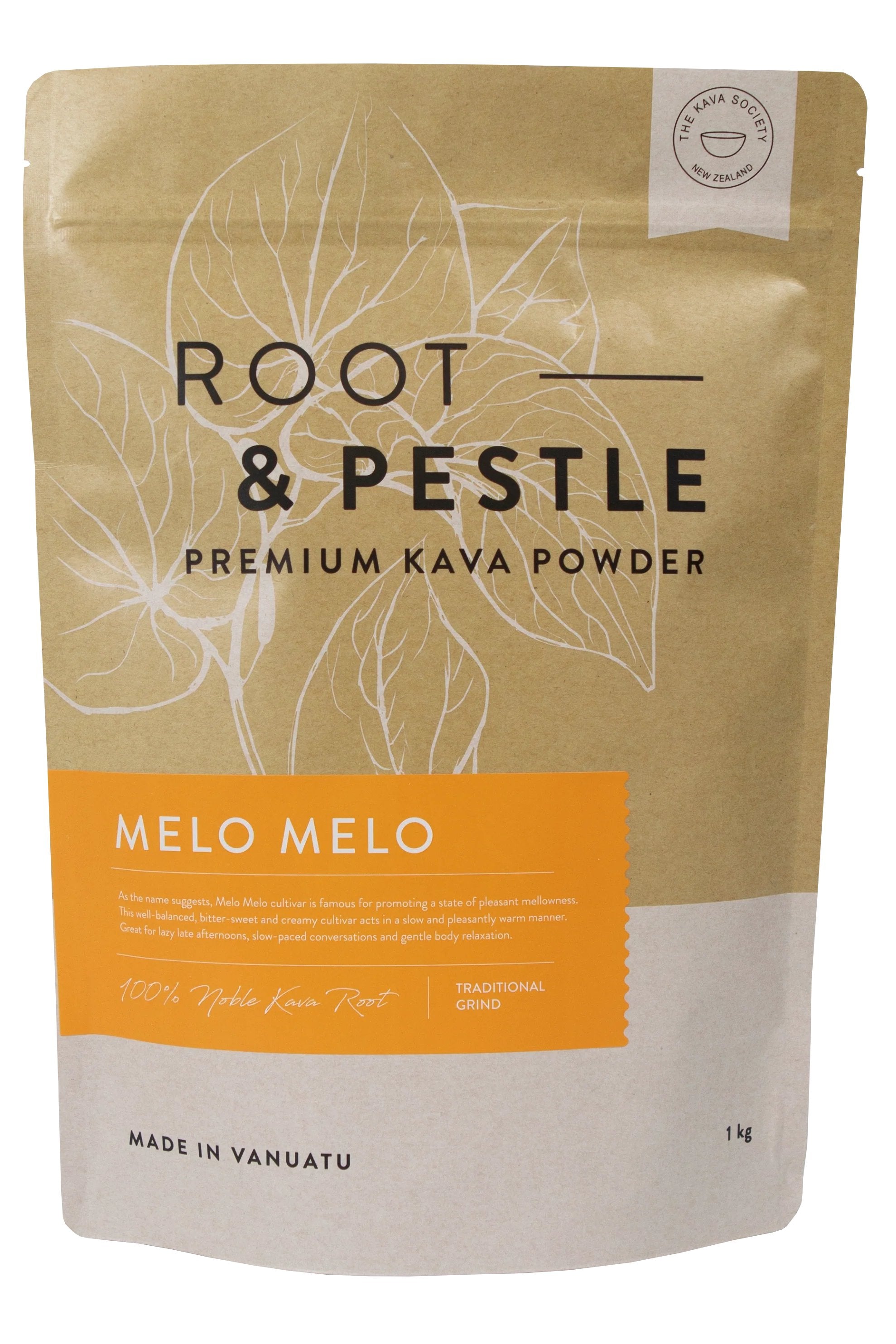
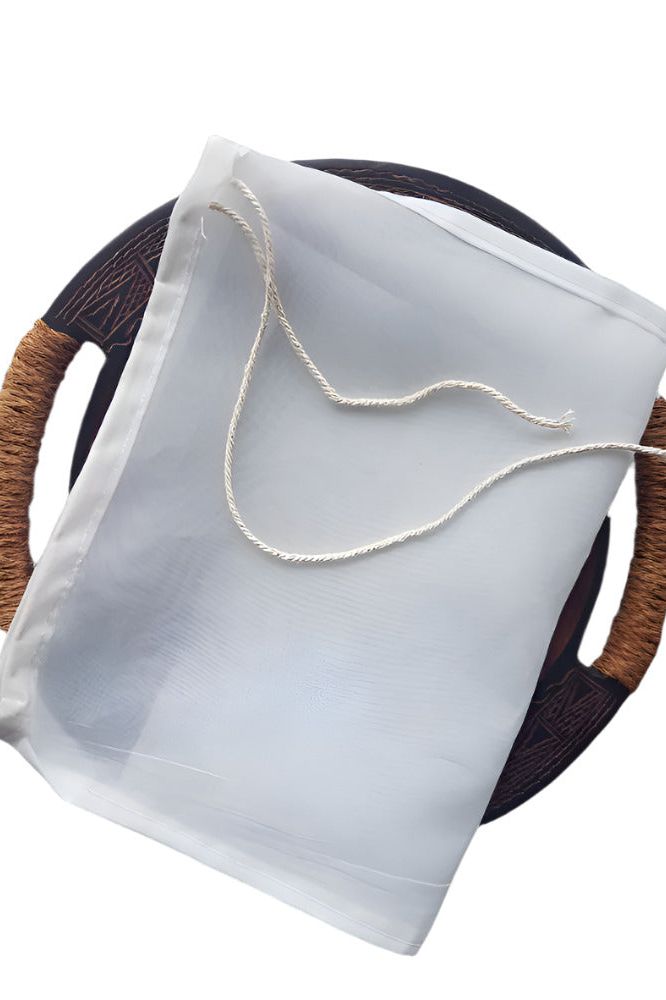
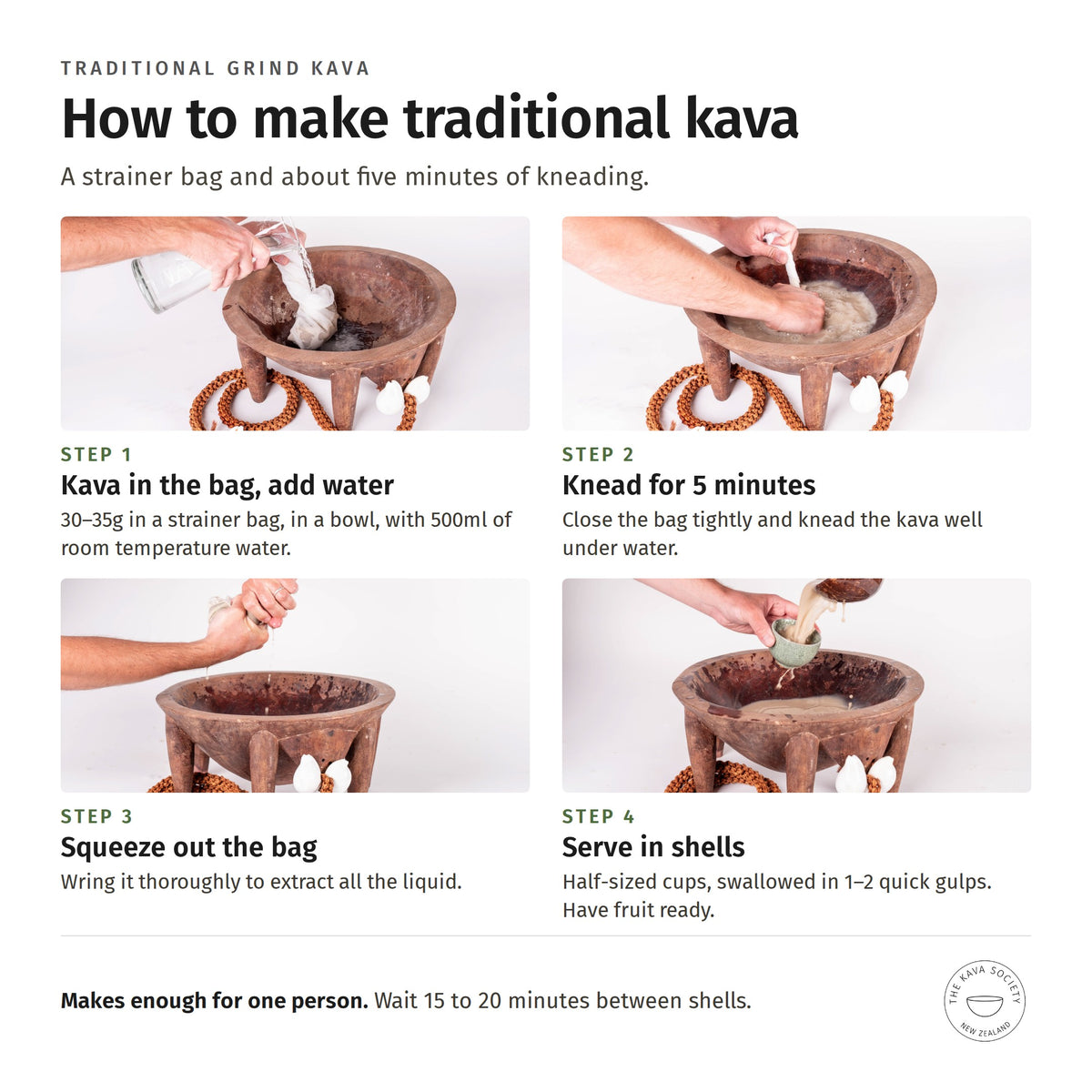
Traditionally, kava is prepared by sealing the ground plant material in a strainer bag (historically woven from plant fibres such as pandanus leaves or coconut husks), immersing the bag in a large bowl (natambea or tanoa) of water, and thoroughly squeezing and kneading. The bag is then removed, wrung out to extract the last drops, and the makas (used kava powder) is discarded.
The alternative is to use a high-speed blender (food processor, smoothie maker, hand blender, or similar) to impart high shear stress to the kava in water, stirring and shredding it simultaneously, then filtering through a strainer bag and wringing it out.
Both methods produce a beverage capable of imparting the effects most kava drinkers are familiar with, and using a blender might make the kava taste stronger. The question is whether it is actually a better extraction method.
Why the blender method became popular
The case for blending really gained prominence in 2015 with the CTAHR method (Gautz, Loren D., Rachel Li, and H. C. Bittenbender. 2015. Preparing Kava: Optimizing kavalactone extraction in water. Proceedings of Kava 2015 Conference, July 25 to 26, 2015, Chaminade University, Honolulu, Hawaii).
CTAHR is a method proposed by Bittenbender et al. that aims to maximise kavalactone extraction. The technique calls for processing kava with water in a blender, but many people overlook that the research was not conducted on commercially available traditional kava powder. That is a very different substance from what their team was working with. Over the years there have been many references to CTAHR, including discussions like this one on r/kava: the original CTAHR thread.
Bittenbender's team investigated eight extraction variables with two conditions each: fresh or dry kava, 20 or 45 degrees Celsius water, blender or hand-kneaded, 60 or 120 second agitation, one or three agitation cycles, 1:3 or 1:1 kava to water ratios, fine or large particle sizes, and lateral roots or rhizomes.
Those variables produce 256 possible combinations, but only sixteen unique combinations were each trialled once to develop the CTAHR method. Only half of those experiments were performed on dry kava (rather than fresh green plants), and even the dry material was not the traditional kava powder most consumers see today. That does not leave a lot of room to recognise outlying data, and it requires a fair bit of inference to arrive at an "optimised" method.
This is not a critique of Bittenbender's work, and our own experimental methods have plenty of limitations too. It is just worth highlighting that CTAHR might have looked quite different if more combinations had been trialled or if the experiments were based on extracting traditional kava powder.
Even with so few experiments, useful information can be extracted with the help of some statistical analysis, and we thank Bittenbender for his contribution to the growing pool of kava knowledge. The more people experimenting and reporting their results, the better. His team has added a tremendous amount of value to the kava scene. That said, it is not easy to isolate with confidence which factors are responsible for which outcomes when multiple variables change between extractions, and the trialled conditions left ample room for further investigation. We have performed hundreds of squeeze experiments and still have much to learn.
What we did
Based on commonly reported settings, we tried to emulate something close to what fans of the blender method seem to do at home. We set our high-powered commercial blender at 7.7 out of 10 (plenty of power without summoning the apocalypse) and ran it for 15 seconds, 30 seconds, 1 minute, 2 minutes, 3 minutes, and 4 minutes, each time blending 62.5 g of traditional kava powder with 1 L of water, then pouring the mixture into an R&P strainer bag and wringing it out over a bowl. The prepared kava was analysed by UHPLC in our analytical laboratory.
We did not blend continuously for 4 minutes straight, both to avoid significantly over-heating the kava and to spare the blender, so for the longer durations we paused intermittently to let things cool. The times reported are actual blending time, not the total duration the mixture sat in the blender (which would have added another couple of minutes at most).
Experiments were performed in triplicate and compared against hand-squeeze results using the same kava-to-water ratio, trying a few different styles and intensities of kneading and squeezing for five minutes each. Squeezing kava is simple, but technique varies, so we wanted to account for that. It does make a difference.
The results
We were underwhelmed by the blender method, both in taste and, more surprisingly, in kavalactone extraction efficiency.
Subjective findings
After 15 seconds in the blender the kava tasted fine but slightly bitter. Bitterness and darkening of the drink were proportional to blending time. After 1 minute the kava was much more bitter. Some people might still find that tolerable; we did not. After 2 minutes it became quite warm, much darker, and fairly unenjoyable. After 3 minutes the kava was very dark, definitely unpleasant for us, and quite a bit hotter. After 4 minutes the most common word used to describe the taste was "gross". It also became rather spicy, which we did not find meshed well with our taste buds, although someone out there might enjoy a more peppery version of kava (assuming they can get past the substantial bitterness).
There is no doubt that hand-squeezing, regardless of technique or intensity, produced a more enjoyable beverage than anything we could make with the blender.
Kavalactone concentrations and ratios
When we averaged all our hand-squeeze efforts and compared the average to what the blender produced, the blender extracted only 85.92% of the kavalactones the hand squeeze did on average. Blender extraction efficiency was proportional to time, and the longest blend finally matched a half-decent hand-squeeze, but powering through the taste and texture at 4 minutes would rule out all but the most iron-mouthed kava lovers.
At 3 minutes or less, the blender produced lower kavalactone content than any of our hand-squeeze tests bar one. The exception was the gentlest possible squeeze: barely a squeeze at all, more like flopping the bag over in the bowl and prodding it softly with the fingers. Every other squeeze we tried, from mild to aggressive (think Conan the Barbarian crossed with Attack of the Giant Anaconda), produced stronger kava than the blender.
As a side note, we found a moderate squeeze worked best overall. A massively intense squeeze extracted marginally more kavalactones (about 3%) than a relaxing dough-kneading squeeze, but the more intense the squeeze, the more bitter the kava became. It required substantially more effort for those meagre gains. Also, although most kavalactones are extracted with relative consistency independent of squeeze exertion, the more intense the squeeze, the lower the K:DHM and K:FK ratios became, nudging the tudei-esque compounds up and our beloved kavain down relative to the other kavalactones.
Blending did a much better job at pulling out the less desirable compounds than hand-squeezing. The extraction efficiency of flavokavains rose slightly with hand-squeeze intensity, but with the blender it rose considerably: an average of 117.48% of what hand-squeezing pulled, with noticeably less kavain (around 7% less, depending on duration) relative to the other kavalactones. Blending also pulled out more dihydromethysticin than hand-squeezing (110.44% on average), so anyone who has ever felt residue from the previous night's kava session has another reason to avoid the blender method.
Traditional kava powder contains a fair amount of indigestible fibre, and anyone who has tried kava without straining the makas out (spilled the bag in the bowl and could not be bothered to filter?) can tell you it is rather unpleasant. When particle size is reduced, as happens in a blender, more of this material slips through the strainer bag. People with a sensitive stomach may want to keep that in mind.
Wrapping it up
In our controlled experiments, blending adversely affected taste, shifted the chemotype in an undesirable direction for most drinkers, imparted more fibre, was not particularly conducive to relaxation, and the cleanup was more hassle than any time saved over a traditional squeeze (we did not find blending to be easier, quicker, or less effort, though some might). Our production team uses a lot of blades around here, and processing a root as tough as kava is terribly hard on equipment. If you are committed to blending, be prepared for the lifespan of your blender to be shortened significantly.
All of these sacrifices could be worth it if blending offered meaningful gains in kavalactone extraction efficiency. It did not. Even a half-hearted squeeze pulled about the same amount of kavalactones into the drink as 3 minutes in our blender, and the hand-squeezed kava always tasted much better.
For people who are unable to perform a traditional kava squeeze, or who prefer their kava on the goopier, hotter, more bitter side, with a little more indigestible fibre and the chemotype shifted slightly closer to tudei, the blender method might be great. For us, it is a hard no.
The R&D team at Root & Pestle wishes you all well, however you choose to prepare your kava.
Our additional comment: is there a third way?
For those who still want a mechanical solution, there might be a middle path: small powder mixers, like the ones used to stir protein powders into water or juice. These stirrers soak and agitate the root particles without generating much heat and without chopping them into smaller bits. We have occasionally used them at the Four Shells Kava Lounge to prepare small amounts of single cultivar kava and have found they produce a drink substantially the same as hand-kneaded kava. They are easy to use, quiet, but only hold around 500 ml of liquid. We have not subjected them to UHPLC analysis, so this is subjective, but the perception in the lounge is that they do the job. We still prefer the traditional way, but if hand-kneading is difficult for you and you prefer traditional grind over instant, a small powder stirrer is a sensible alternative to a powerful blender. They are inexpensive (around $20 as of October 2024). Email us if you want more information.
Further reading from the Root & Pestle lab
If you found this useful, the rest of the Root & Pestle research series goes deeper into the variables that actually do move the needle on a good shell:
- Best water temperature for making kava
- Optimal kava kneading and preparation time
- The science behind efficient traditional preparation
- Should you add fats to kava to get a stronger drink?
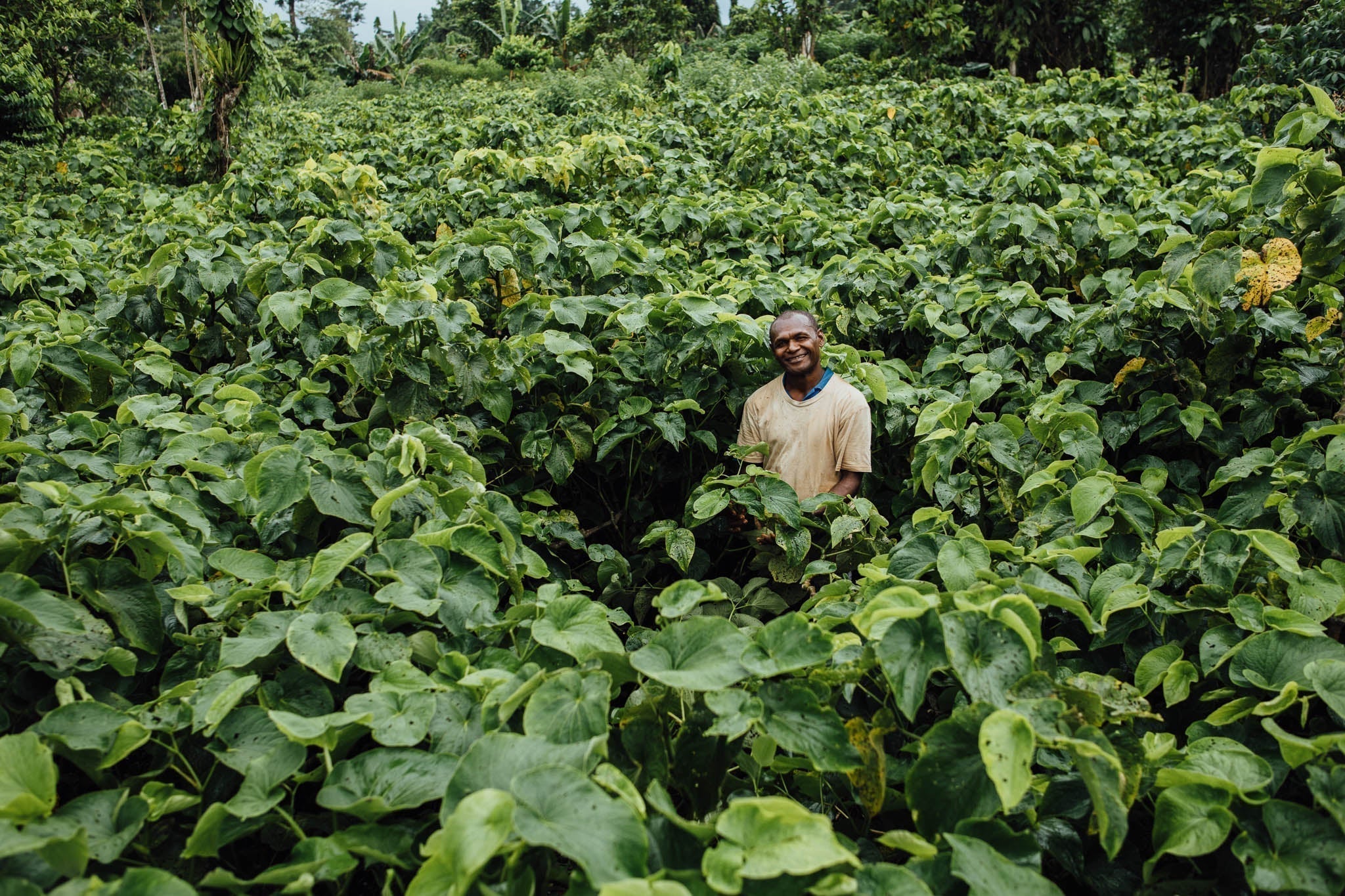
If you would rather skip the kneading entirely, our instant kava range is freshly harvested kava processed in our Vanuatu facility with the coarse fibres removed before drying. No blender, no strainer, just stir into water. If you're new to kava, our quick guide for new drinkers is the best place to figure out where to start.





Leave a comment
This site is protected by hCaptcha and the hCaptcha Privacy Policy and Terms of Service apply.